The Future of CAD: AI, Cloud Collaboration And Virtual Prototyping
- Aug 6, 2025
- 3 min read
Updated: Aug 12, 2025
By: Sherwin Fernandes
As technology continues to redefine how products are developed, Computer-Aided Design (CAD) is evolving beyond its traditional role. Once limited to 2D drafting and static 3D models, CAD is now entering a new era—powered by artificial intelligence, cloud connectivity, and immersive virtual environments.
These emerging technologies are not simply enhancing CAD—they are transforming it. In this article, we explore three key drivers shaping the future of CAD: AI integration, cloud-based collaboration, and virtual prototyping.
AI Integration: Intelligent Design at Scale
Artificial intelligence is making CAD smarter, faster, and more capable than ever before. Traditional CAD workflows often rely on manual iteration and experienced-based design decisions. AI is disrupting that paradigm by introducing automation, predictive capabilities, and data-driven optimization.
One of the most significant breakthroughs is generative design. Engineers can now input specific design objectives—such as load requirements, material constraints, or manufacturing methods—and the software generates a range of optimized geometries. These solutions often outperform human-designed models in both performance and efficiency.

AI also enables automated error detection, identifying potential issues like part interference, non-compliant tolerances, or manufacturability problems before a design reaches prototyping. Combined with machine learning algorithms, CAD tools are now learning from past projects to offer real-time smart suggestions, enhancing both speed and accuracy.
The integration of AI into CAD marks a turning point—from tools that assist the designer to systems that actively co-create with them.
Cloud-Based Collaboration: A New Era of Connectivity
The shift to remote work and globalized project teams has accelerated the adoption of cloud-based CAD platforms. Unlike traditional desktop-based software that limits access and version control, cloud platforms allow multiple stakeholders to collaborate on a single design in real time, from anywhere in the world.
With cloud collaboration, versioning headaches are eliminated. Everyone works from the same master file, with changes tracked automatically. Clients, engineers, and manufacturers can review, comment, and iterate within the same interface, improving communication and reducing delays.

Moreover, cloud-based CAD systems are device-agnostic, meaning users no longer need expensive workstations to handle complex models. Processing is handled in the cloud, allowing even lightweight devices to access powerful design tools.
This democratization of CAD enables faster workflows, better team integration, and lower infrastructure costs—critical advantages in today’s fast-paced development cycles.
Virtual Prototyping: Design Meets Immersion
Prototyping has always been a crucial step in product development, but physical prototyping is time-consuming and expensive. The emergence of virtual prototyping is addressing these challenges head-on, offering immersive ways to visualize, test, and validate designs—before anything is built.
Using simulation tools and digital twin technology, designers can now model real-world physics, stress, motion, and performance under operating conditions. This allows early detection of design flaws and improves confidence before entering physical production.
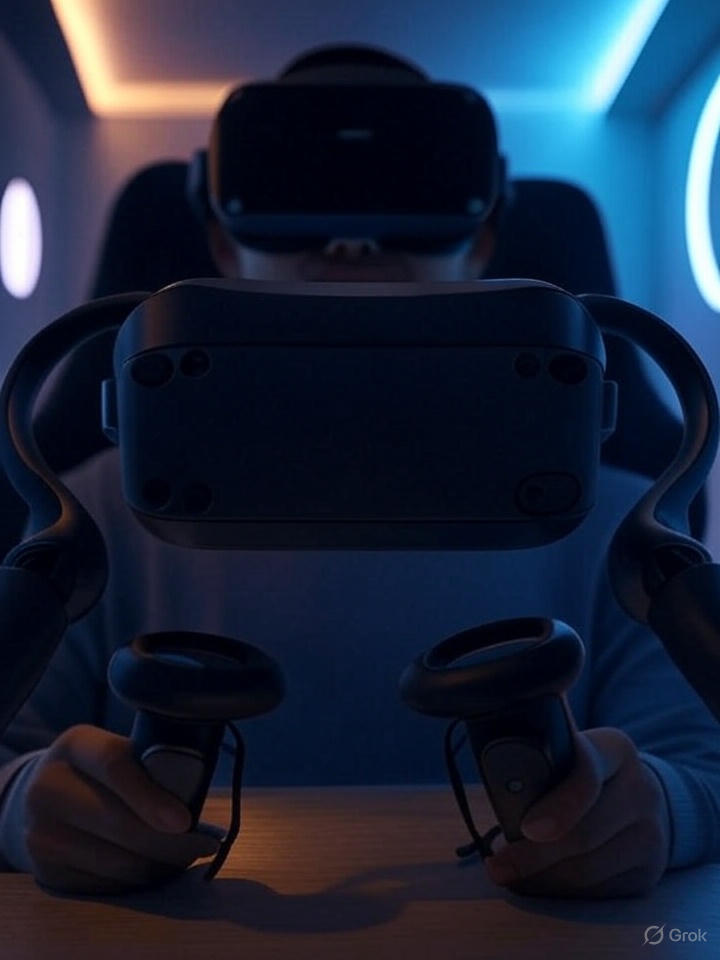
Beyond simulation, Extended Reality (XR) technologies—such as Virtual Reality (VR) and Augmented Reality (AR)—are making it possible to interact with full-scale 3D models in immersive environments. Designers can walk around a vehicle interior, simulate user interaction with a product, or overlay digital prototypes onto real-world spaces.
Virtual prototyping reduces material waste, shortens feedback loops, and empowers teams to make better-informed decisions—all while significantly reducing development costs.
Looking Ahead
The future of CAD is not defined by a single technology, but by the convergence of intelligence, connectivity, and immersion. Together, AI, cloud collaboration, and virtual prototyping are reshaping the way we design and develop products—making workflows faster, more efficient, and more innovative.
For companies that rely on engineering and product development, embracing these technologies is no longer optional. It is a strategic necessity.
At Shape Theory, we’re investing in these next-generation CAD capabilities to help our clients stay ahead of the curve. Whether you’re modernizing your product design process or exploring the potential of AI and virtual design, we’re here to help you lead the future of engineering.
Looking to Bring Your Next Project to Life?
Our CAD experts are ready to support your ideas with precision, creativity, and speed. Contact us today to learn more about our custom CAD services for emerging industries.


Comments